
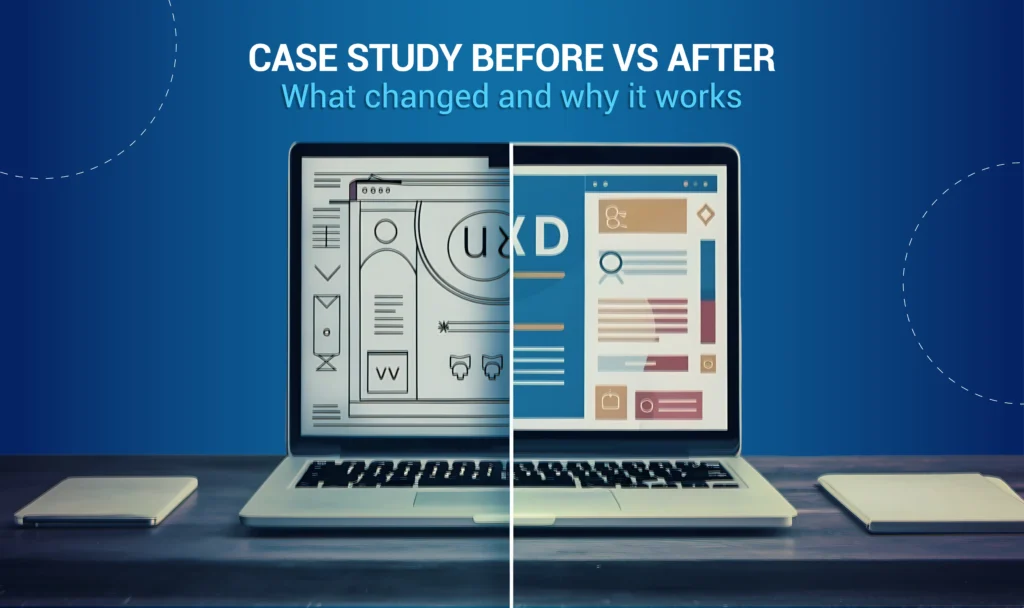
A company website frequently looks pretty good from the inside. The different teams are familiar with all the pages, promotions, and the whole situation. The outsiders come in without any context at all. Disparities appear quickly. This Website Redesign Case Study discusses how a business website redesign changed performance, transparency, and trust. The emphasis remains on the modifications, justifications, and the quantifiable redesign impact. You will visualize the transitions, comprehend the reasons of the betterment, and grasp how a redesign strategy was the beacon for every step.
Before the Redesign: What Held Performance Back
The original website launched years earlier and grew page by page. Content expanded without structure. Navigation reflected internal thinking rather than visitor needs. Mobile experience lagged. Load times stretched beyond patience.
User experience redesign never guided early decisions. Pages competed for attention. Calls to action blended into layouts. Key services required multiple scrolls. Bounce rates climbed. Session duration dropped.
Web performance metrics confirmed friction. Core Web Vitals showed slow paint times. Forms loaded late. Images lacked optimization. Search visibility declined despite steady content output. Website results stalled.
Business impact followed. Leads arrived unevenly. Sales teams faced confused prospects. Trust weakened during first visits. Redesign impact became a priority rather than a future idea.
Redesign Strategy: Goals Before Design
A redesign case study works best when the goals are clear. Code and Fable began with questions rather than visuals. What should visitors understand in five seconds. Which actions are most important? Where does friction impede progress?
Research influenced decisions. Analytics identified exit points. Heatmaps revealed ignored sections. User interviews revealed confusion about services. Competitor reviews revealed common expectations in similar markets.
The redesign strategy centered on clarity, speed, and flow. Fewer pages carried a greater purpose. Each section answered a single question. Copy shifted to emphasize outcomes and processes. Design encouraged reading rather than decoration.
Website redesign planning also set benchmarks. Load time targets aimed below three seconds. Mobile layout became default rather than secondary. Accessibility standards shaped contrast and spacing.
After the Redesign: What Changed on Screen
Navigation moved first. Primary menu dropped from nine items to five. Service categories gained plain language labels. Visitors reached core pages within two clicks.
User experience redesign reshaped layouts. Headlines appeared early. Supporting text stayed concise. Visual hierarchy guided eyes naturally. White space improved scanning. Buttons stood apart through color contrast and placement.
Content structure followed intent. Each page opened with value statements. Proof followed through case highlights and process steps. Calls to action appeared after clarity rather than before.
Web transformation included performance upgrades. Image formats shifted to lighter standards. Scripts loaded selectively. Hosting improved response times. Core Web Vitals scores rose across devices.
Tone also changed. Copy spoke directly to readers. Sentences stayed short. Jargon disappeared. Trust formed through transparency rather than claims.
Website Results: Measured Redesign Impact
The results appeared within weeks. The page load speed has dropped by more than 40%. The mobile bounce rate fell dramatically. The average session duration increased.
Lead quality has improved. Contact forms drew clearer inquiries. Sales conversations were shortened. Prospects referred to specific pages during calls. The business website redesign paid off in terms of efficiency.
Search performance was the next step. Improved structure aided indexing. Keyword relevance is consistent with intent. Organic traffic growth has stabilized following months of decline.
Metrics did not capture the full impact of redesign. Internal teams gained confidence by sharing links. Brand perception improved. Website results aided growth plans rather than impeding teams.
Why This Website Redesign Case Study Works
Success came from restraint. Every addition earned purpose. Removal mattered as much as creation. Redesign strategy stayed rooted in behavior and data.
User experience redesign guided each choice. Visitors received guidance rather than options overload. Web performance supported patience. Content respected attention.
This redesign case study shows transformation through focus. Visual polish followed function. Results followed clarity.
Code and Fable: How Strategy Drives Redesign Outcomes
Code and Fable approaches website redesign through understanding first. Research shapes structure. Design follows logic. Development supports speed and stability.
Teams avoid trend chasing. Decisions respond to audience behavior and business goals. Web transformation stays grounded in results rather than aesthetics.
Clients gain websites built for growth. Strategy remains visible throughout process. Outcomes remain measurable.
FAQs
1. What defines a strong Website Redesign Case Study
Clear before and after data, explained decisions, and measurable website results define quality.
2. How long does a business website redesign take
Timelines vary by scope. Strategy and research often shape early phases before design work begins.
3. Which metrics matter most after a redesign
Page speed, bounce rate, session duration, and conversion quality offer reliable insight.
4. Does user experience redesign affect search performance
Improved structure and performance support crawlability and engagement signals.
5. When should a website redesign start
Consistent lead decline, slow performance, or user confusion signal timing for change.